
🇯🇵 Kanazawa Travel Guide 2026
Kenrokuen Garden, Samurai Streets, Geisha Districts & Incredible Food
If Kyoto shows you Japan’s imperial elegance and Osaka gives you its energetic street culture, Kanazawa offers something different — a quieter, beautifully preserved side of traditional Japan.
Located on the Sea of Japan coast in Ishikawa Prefecture, Kanazawa flourished under the powerful Maeda family during the Edo period. Today, the city is known for beautifully preserved samurai neighborhoods, historic geisha districts, traditional crafts, fresh seafood, and one of Japan’s most celebrated landscape gardens.
What makes Kanazawa especially appealing is how compact it is. Many of its major attractions are concentrated within roughly two kilometers of Kanazawa Castle, making it possible to explore much of the historic center on foot or with the Kanazawa Loop Bus.
For travelers who loved Kyoto but want somewhere calmer and easier to explore, Kanazawa is one of the best cities to add to a Japan itinerary in 2026.
✈️ Quick Travel Information
| Travel Info | Details |
|---|---|
| 📍 Location | Ishikawa Prefecture, Japan |
| 🚄 From Tokyo | About 2 hr 30 min by Hokuriku Shinkansen |
| 🚆 From Kyoto / Osaka | Thunderbird to Tsuruga + Hokuriku Shinkansen, around 2 hours |
| 🗓️ Recommended Stay | 2–3 days |
| 🌸 Best Time | Spring and autumn; winter for snowy scenery |
| 🚌 Getting Around | Walking + Kanazawa Loop Bus |
| 🏯 Famous For | Kenrokuen, samurai districts, geisha districts, gold leaf, seafood |
| 🍣 Must-Try Food | Kaisendon, sushi, crab, nodoguro, Kanazawa curry |
| 💴 Currency | Japanese Yen (JPY) |
| 🗣️ Language | Japanese; English available at major tourist locations |
| 💡 Travel Style | Culture, history, gardens, food, photography |
Travel times vary by service, but official tourism information currently lists roughly 2½ hours from Tokyo and around 2 hours from the Osaka/Kyoto direction via Tsuruga.
🌿 1. Kenrokuen Garden — Kanazawa’s Must-See Landmark
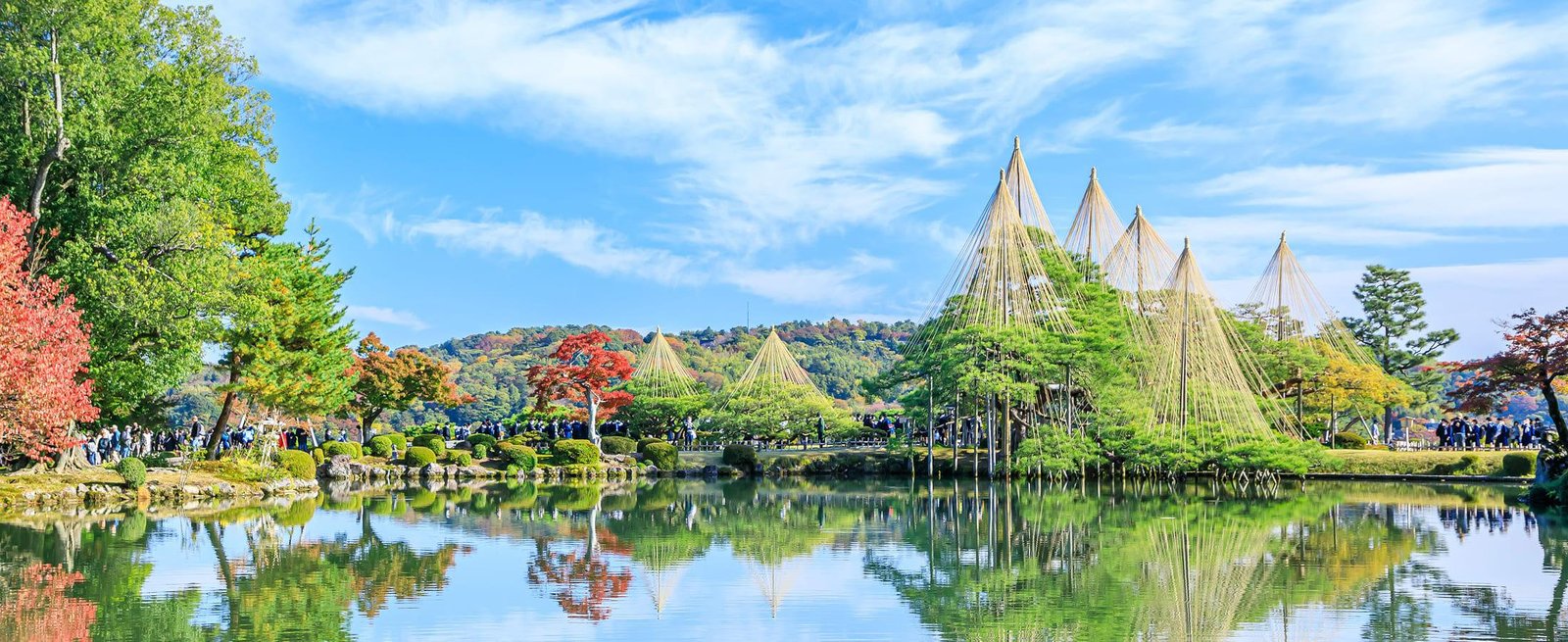
No first visit to Kanazawa would be complete without kenrokuen.
Considered one of Japan’s three great landscape gardens, Kenrokuen covers approximately 11.4 hectares beside Kanazawa Castle. The garden was developed over generations by the Maeda family and combines ponds, streams, bridges, carefully shaped trees and scenic viewpoints.
Its name refers to six qualities traditionally associated with an ideal landscape garden: spaciousness, tranquility, artifice, antiquity, water sources and magnificent views.
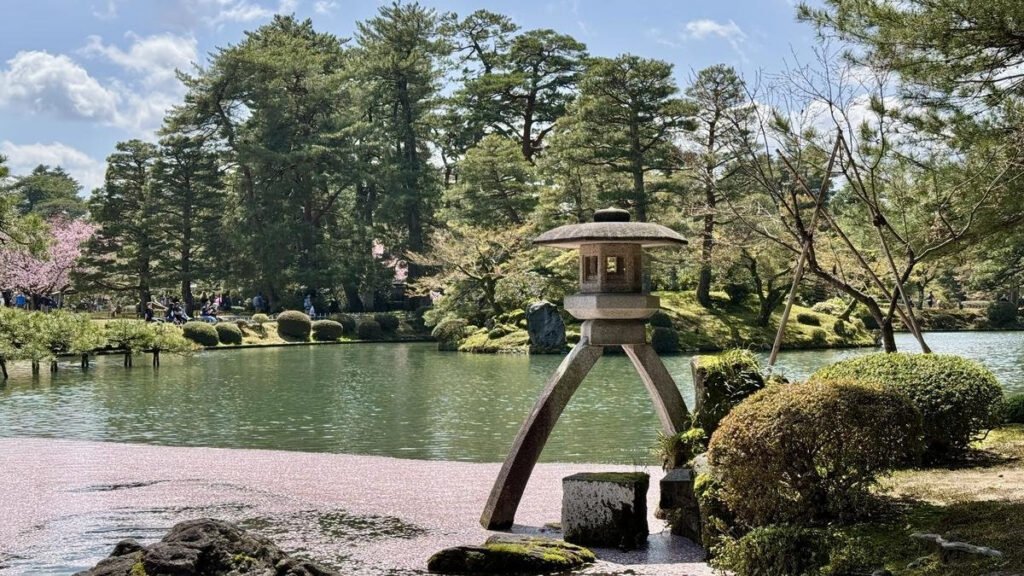
One of Kenrokuen’s most recognizable scenes is the Kotoji-toro stone lantern beside Kasumigaike Pond. This is the classic Kanazawa photograph, especially early in the morning before the busiest sightseeing hours.
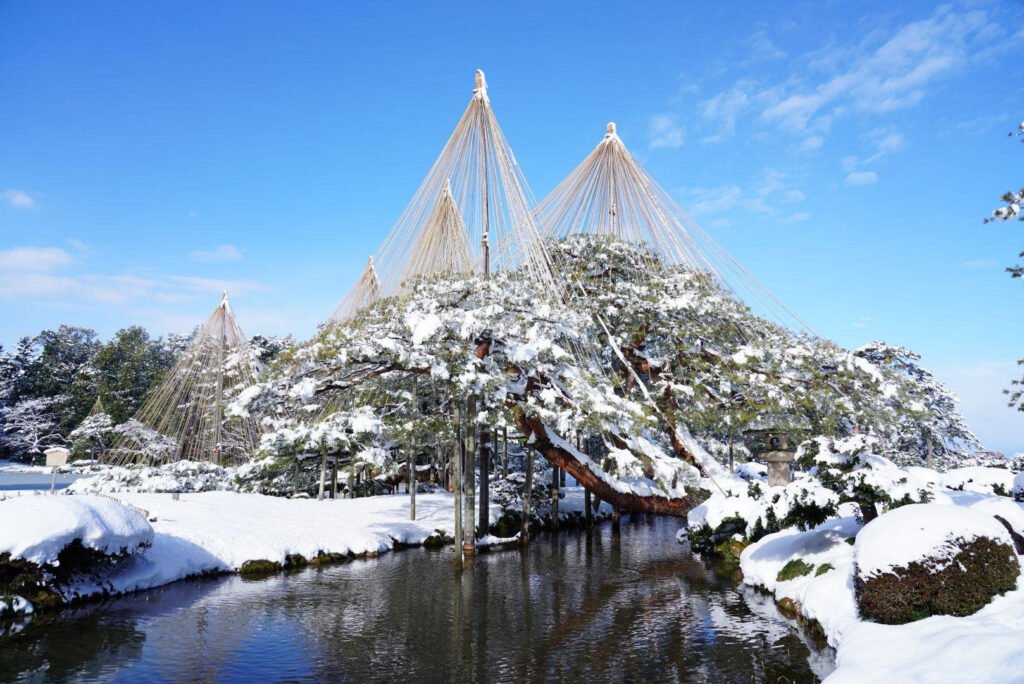
The experience changes dramatically with the seasons. Spring brings cherry blossoms, summer turns the garden intensely green, autumn fills it with red and gold foliage, while winter introduces Kanazawa’s famous yukitsuri — ropes arranged around trees to protect their branches from heavy snow.
💡 TravelNest365 Tip
Visit early in the morning if possible. Not only is the atmosphere quieter, but the softer morning light works beautifully for photography.
As of the current official listing, general admission is ¥320 for adults and ¥100 for children aged 6–17, and the garden is open year-round. Seasonal hours vary.
🏯 2. Kanazawa Castle Park
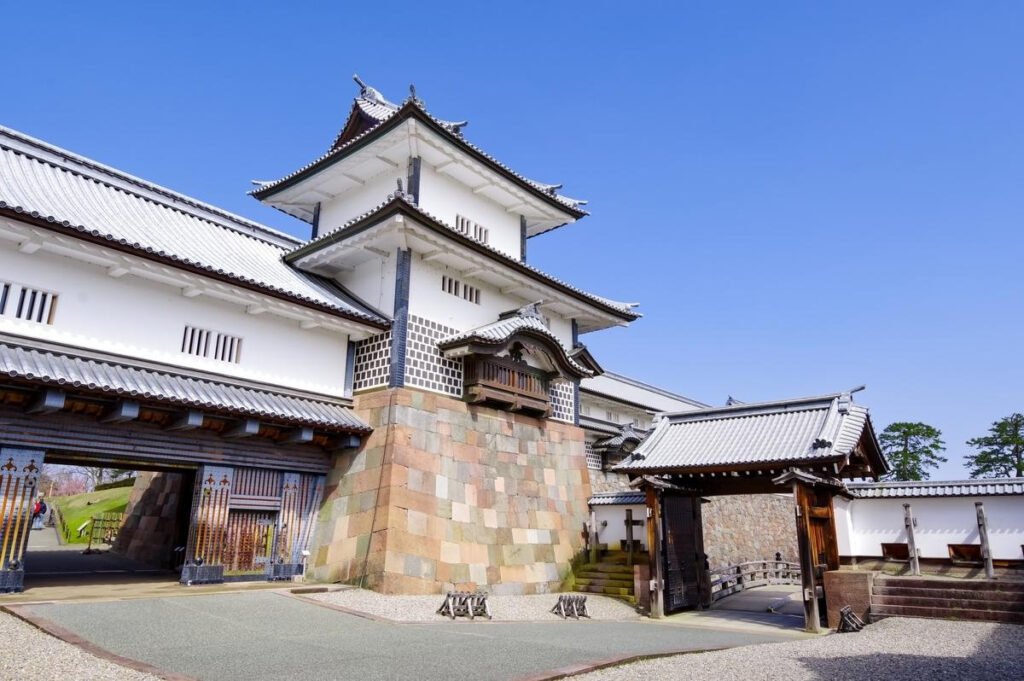
Directly beside Kenrokuen is kanazawa castle park, once the seat of the powerful Maeda family.
Although fires destroyed many of the original structures over the centuries, significant sections have been reconstructed using traditional Japanese building techniques. The result gives visitors a fascinating look at the architectural character of one of Japan’s most important feudal domains.
Walk through the impressive gates and expansive grounds before exploring reconstructed turrets and storehouses.
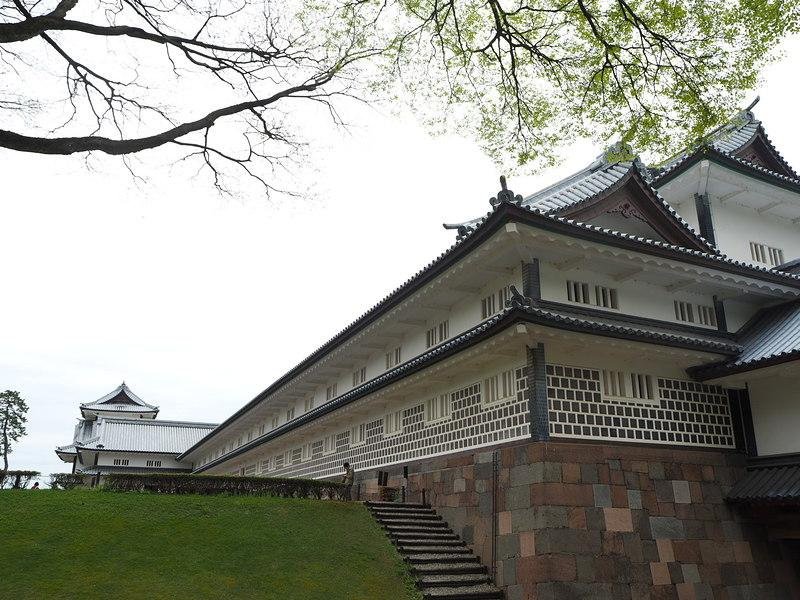
The grounds themselves are free to enter, while admission is charged for several reconstructed interior buildings. The adjacent Gyokusen-inmaru Garden is also worth including while you are here.
📸 Best Route
A particularly easy first-day route is:
Kenrokuen → Kanazawa Castle → Gyokusen-inmaru Garden
Because the attractions sit beside one another, you can explore all three without wasting time on transportation.
🏮 3. Higashi Chaya District — Step Into Old Japan
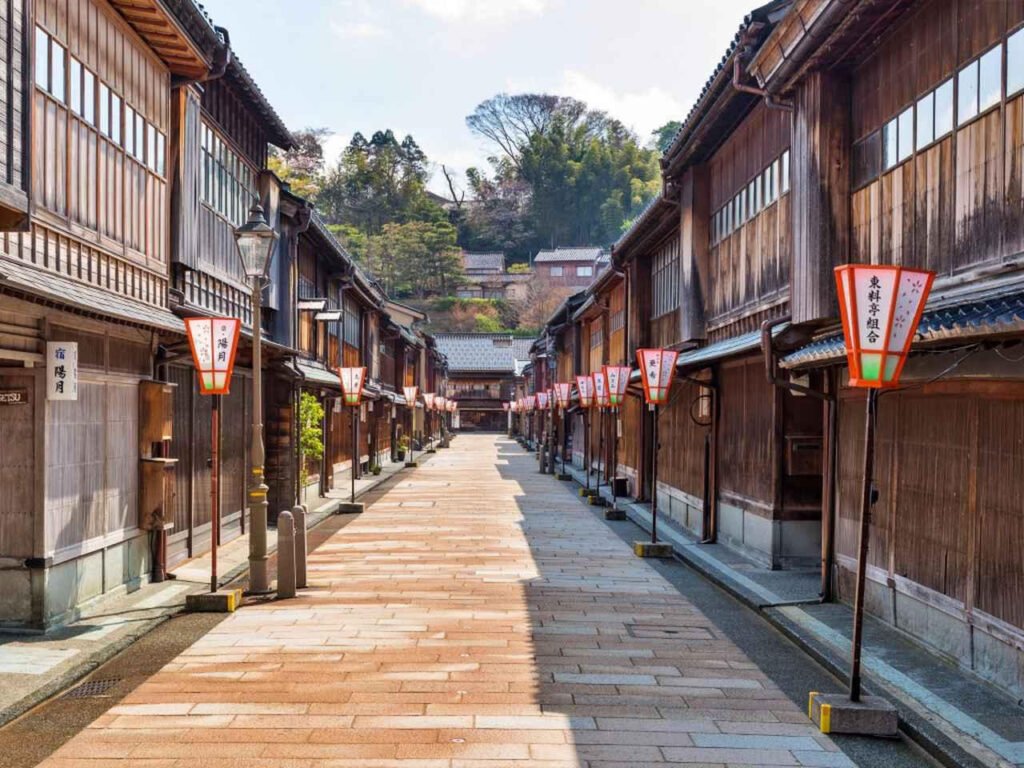
Next, head to 히가시차야가이, Kanazawa’s largest and most famous historic chaya district.
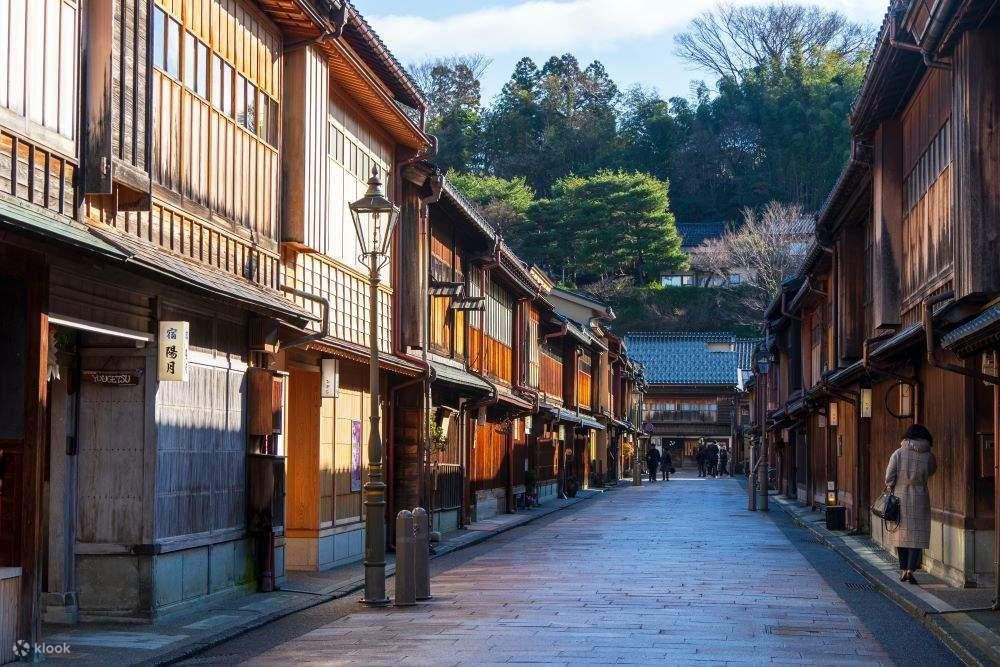
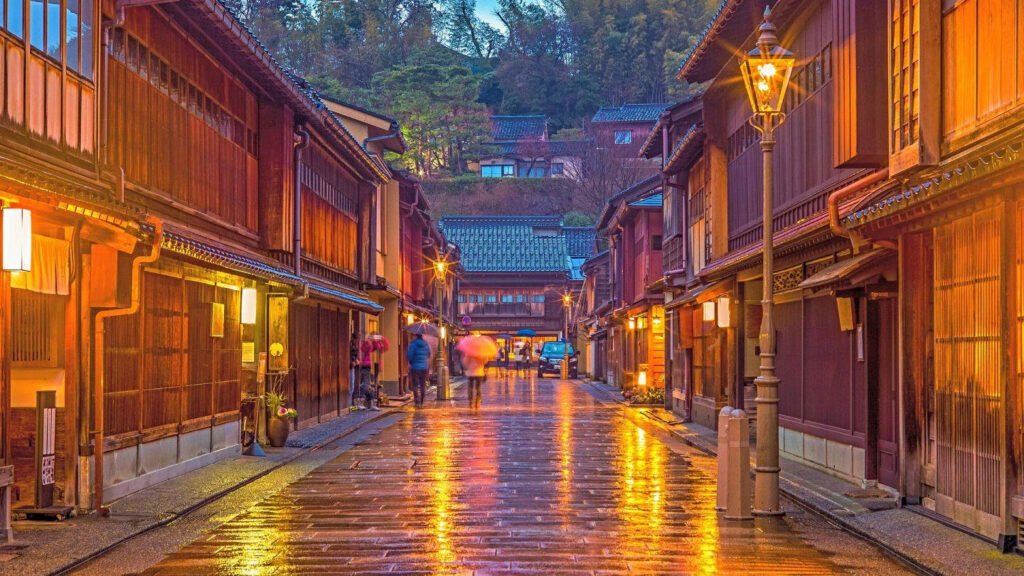
The neighborhood is lined with beautifully preserved wooden buildings featuring traditional lattice façades. During the Edo period, chaya houses were places where geisha entertained guests with music, dance and conversation. The district remains one of Kanazawa’s most atmospheric historic areas today.
Walk slowly through the narrow streets rather than treating this as a quick photo stop. Historic buildings now house traditional cafés, restaurants, craft stores and shops specializing in Kanazawa’s famous gold-leaf products.
Kanazawa is particularly famous for gold leaf, and the city remains Japan’s dominant center for its production.
That means this is also one of the places where you will encounter the famous — and extremely photogenic — gold-leaf soft-serve ice cream.
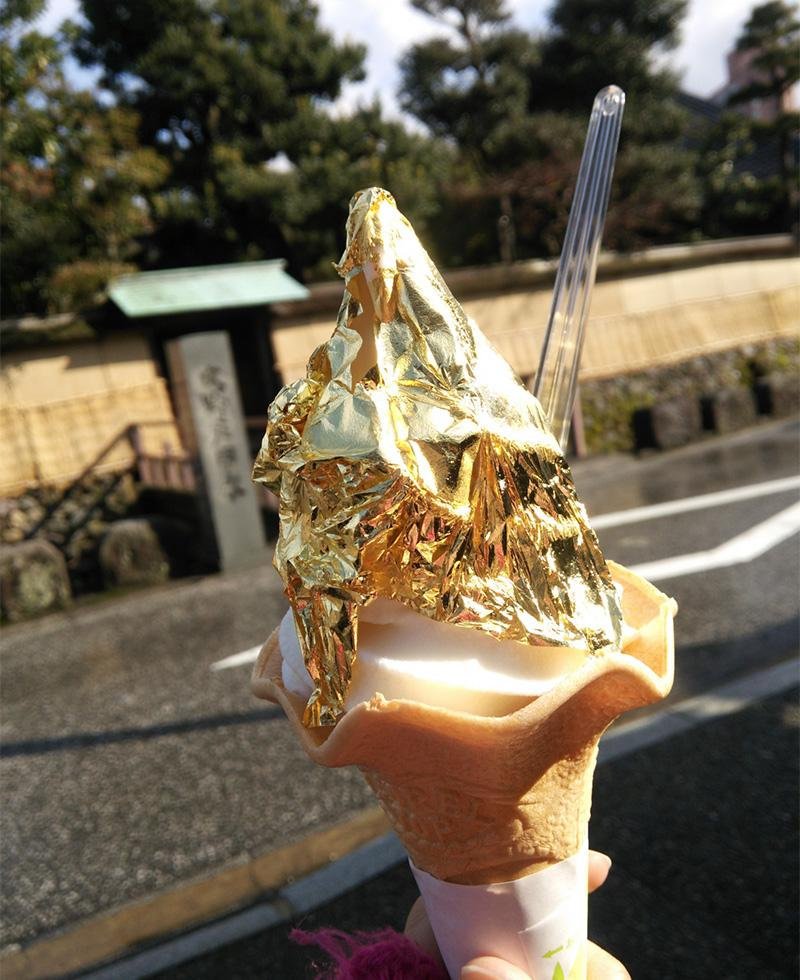
Yes, it is touristy.
And yes, this is probably one of those times when you should try it anyway. 😄
🧭 PART 1 Route
Kanazawa Station → Kenrokuen Garden → Kanazawa Castle → Higashi Chaya District
This route already covers three of Kanazawa’s signature experiences: Japanese gardens, samurai-era history and traditional geisha culture.
And because central Kanazawa is compact, these attractions are surprisingly easy to combine. For example, the official city guide estimates about 20 minutes on foot from Kenrokuen to Higashi Chaya, with the Loop Bus available when you want to save your legs.
⚔️ 4. Nagamachi Samurai District — Walk Through Kanazawa’s Samurai Past
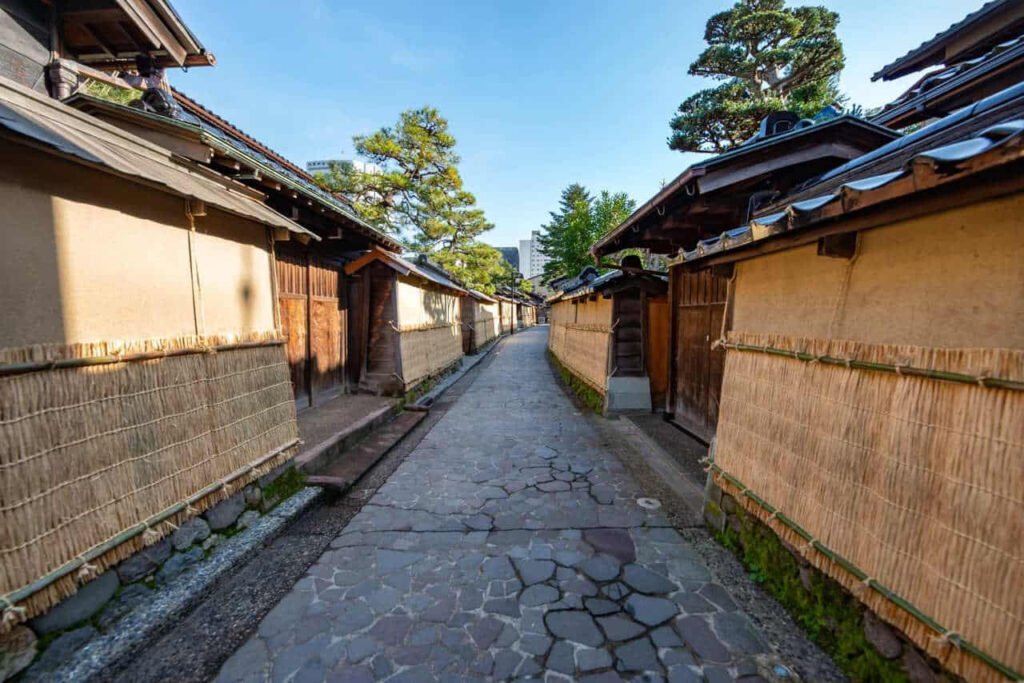
After experiencing Kanazawa’s elegant geisha culture, head to Nagamachi Samurai District, one of the best-preserved samurai neighborhoods in Japan.
During the Edo period, this area was home to middle- and high-ranking samurai who served the powerful Maeda family. Unlike many historic districts in major Japanese cities, Nagamachi escaped large-scale fires and wartime destruction, helping preserve its narrow streets, traditional waterways, earthen walls and former samurai residences.
Walking through Nagamachi feels noticeably different from Higashi Chaya. The atmosphere is quieter and more residential, with stone-paved lanes running between ochre-colored walls and traditional wooden gates.
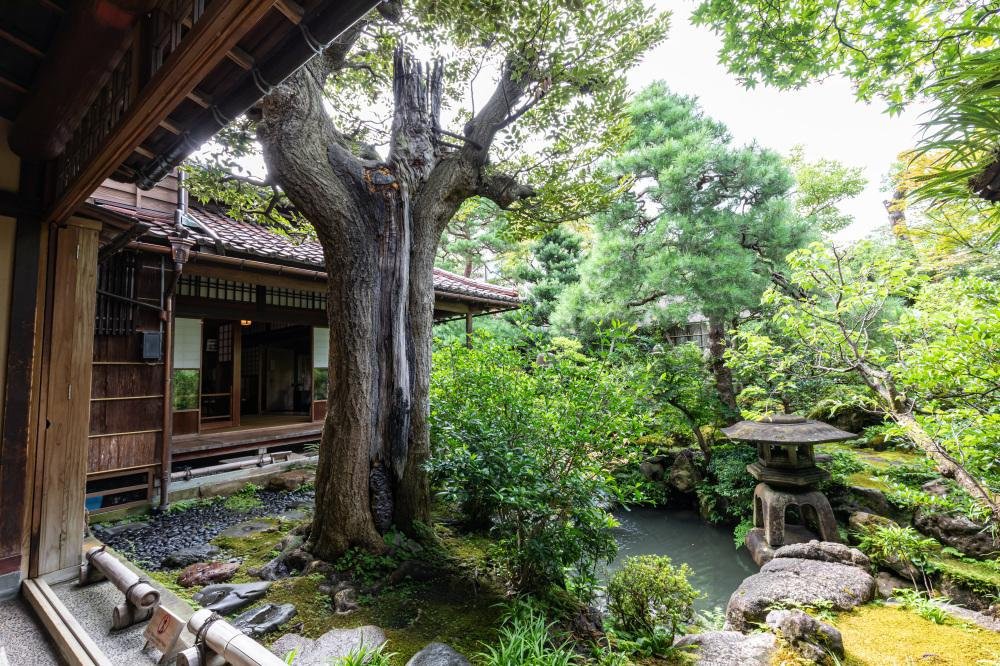
One of the district’s best-known attractions is the Nomura Samurai Residence, a restored home associated with retainers of the Maeda clan.
Inside, visitors can see traditional tatami rooms, detailed woodwork and a beautiful compact Japanese garden with stone lanterns, water and carefully maintained vegetation.
💡 TravelNest365 Tip
Allow around one hour to wander through Nagamachi rather than visiting only the Nomura residence. The official Kanazawa tourism guide also suggests about an hour for exploring the district.
During winter, look for komo-kake, protective straw coverings placed over the historic earthen walls to reduce damage from freezing temperatures and snow.
🍣 5. Omicho Market — The Kitchen of Kanazawa
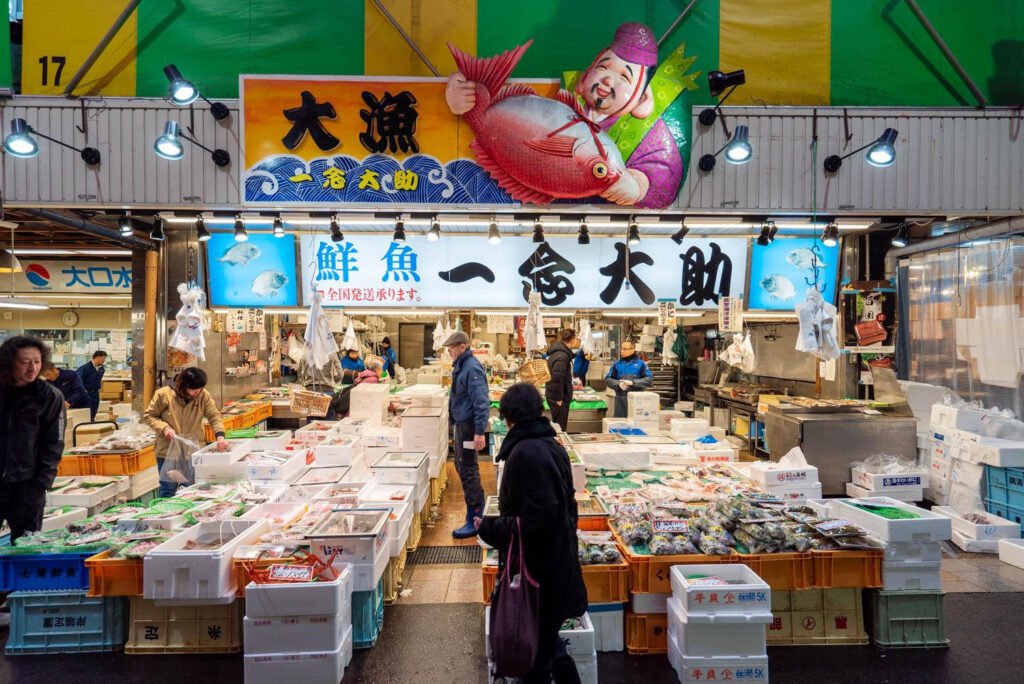
Now it is time for one of my favorite parts of any Japan itinerary:
Food. 😄
Omicho Market has been part of Kanazawa’s food culture for more than 300 years. Today, more than 170 shops operate throughout the market, including seafood vendors, produce stalls, grocery shops and restaurants.
Its location close to the Sea of Japan makes seafood the star attraction.
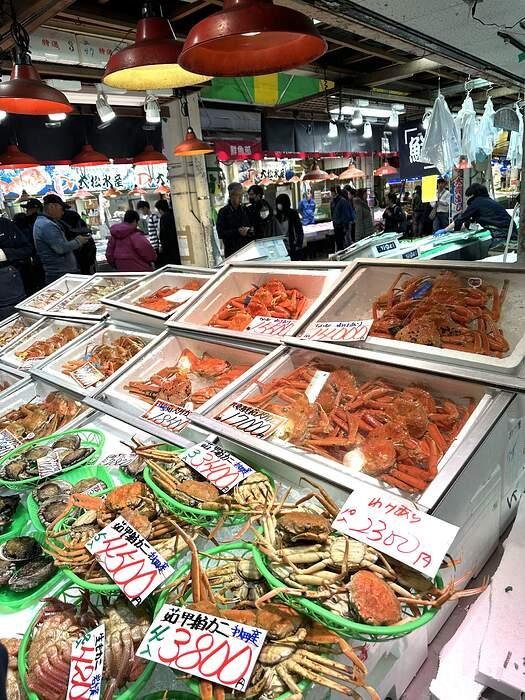
Walk through the market and you will encounter displays filled with fresh fish, shellfish and seasonal specialties. Crab, yellowtail and shrimp are particularly celebrated during the colder season around November.
But don’t simply walk through taking photographs.
Come hungry.
🍚 What to Eat at Omicho Market
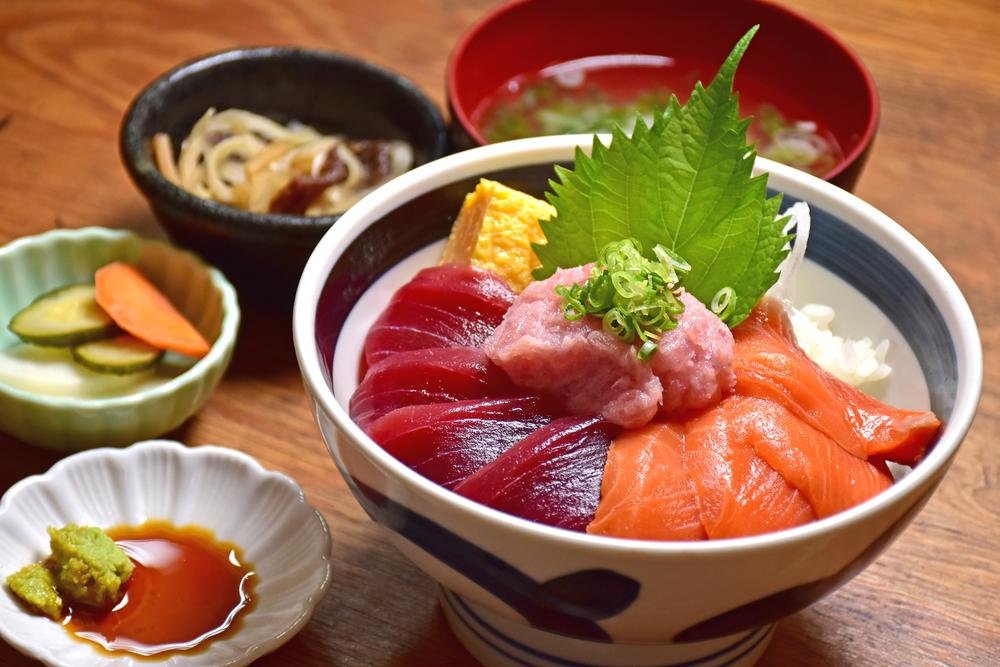
One of the easiest introductions to Kanazawa seafood is kaisendon — a bowl of rice topped generously with assorted sashimi.
Depending on the season and restaurant, toppings may include tuna, salmon roe, shrimp, crab, sea urchin and locally caught fish.
Another specialty worth looking for around Kanazawa is nodoguro, often called blackthroat seaperch. It is prized for its rich, fatty texture and can be served grilled, as sushi or as sashimi.
If you visit during crab season, you will also see plenty of Sea of Japan crab appearing throughout the market.
💡 TravelNest365 Tip
Go earlier rather than later if Omicho Market is high on your food list.
The official tourism listing gives general market hours of approximately 9:00 AM–4:00 PM, although individual shops and restaurants set their own schedules.
A seafood breakfast or early lunch here also leaves the afternoon free for sightseeing.
🎨 6. 21st Century Museum of Contemporary Art
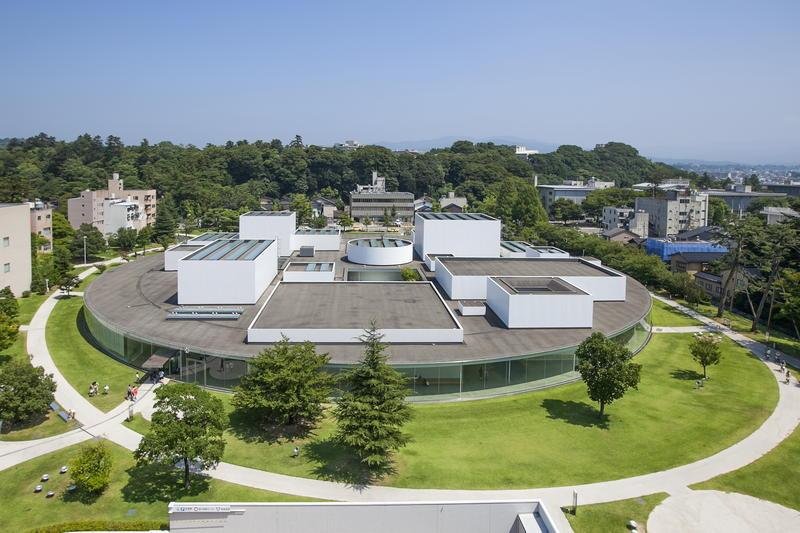
Kanazawa isn’t only about samurai, geisha and Edo-period architecture.
The 21st Century Museum of Contemporary Art, Kanazawa provides an almost complete change of atmosphere.
Its circular contemporary design and open public spaces have made it one of the city’s most recognizable modern landmarks.
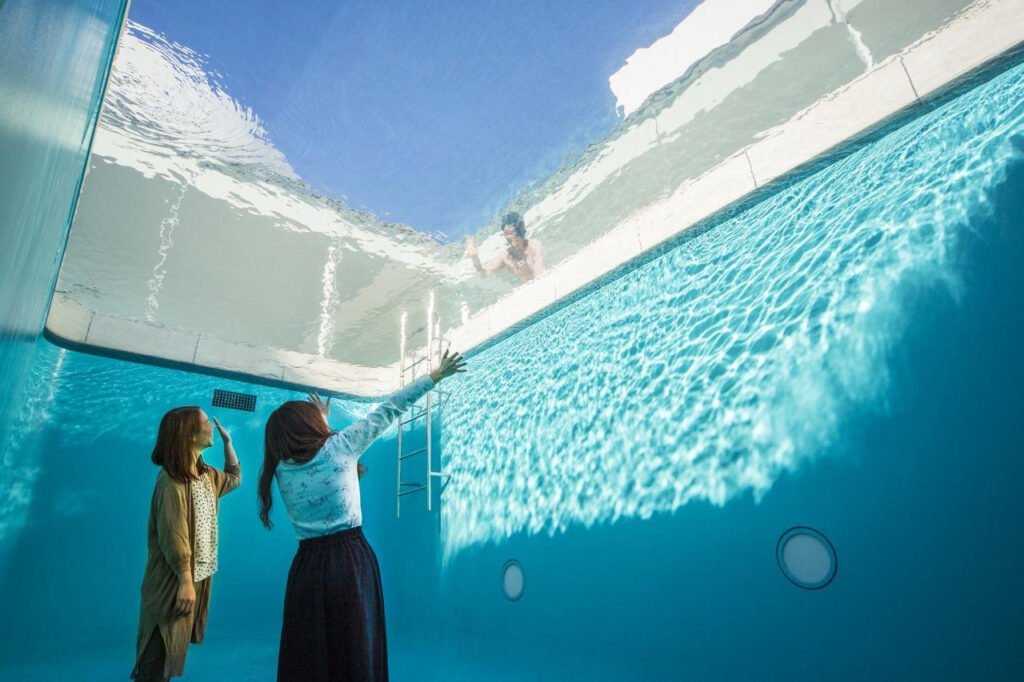
The museum hosts changing exhibitions alongside its collection, so exactly what you can see will depend on your travel dates.
One of the best-known works associated with the museum is Leandro Erlich’s The Swimming Pool, an installation designed to create the illusion of people standing underwater.
For 2026 planning, the museum’s exhibition zone currently lists hours of 10:00 AM–6:00 PM, extending to 8:00 PM on Fridays and Saturdays. The public zone operates from 9:00 AM–10:00 PM. The exhibition zone is generally closed on Mondays, with adjustments when Monday is a national holiday, plus scheduled New Year closures.
💡 Before You Visit
Because exhibitions, ticket requirements and access to individual artworks can change, check the museum’s official schedule shortly before your visit rather than planning around a single installation months in advance.
This is especially useful if The Swimming Pool is one of your main reasons for visiting.
🚉 7. Kanazawa Station & Tsuzumi-mon Gate
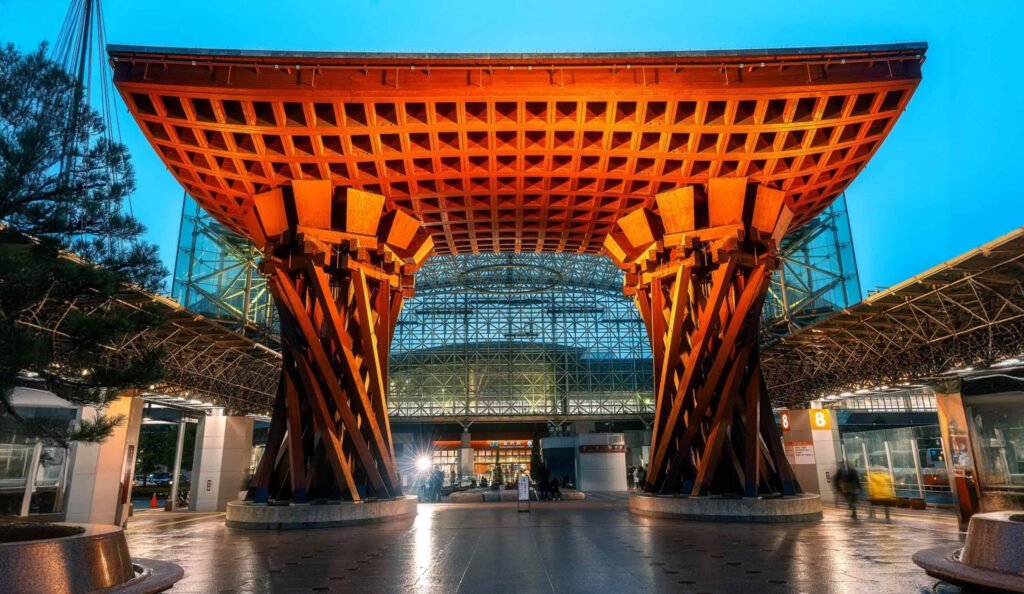
Don’t treat Kanazawa Station as simply somewhere to catch your train.
Outside the Kenrokuen Exit stands the spectacular Tsuzumi-mon Gate, whose design was inspired by the traditional tsuzumi drums used in Noh theater. The wooden structure reaches approximately 13.7 meters high.
Behind it is another striking piece of architecture — the huge glass-and-steel Motenashi Dome.
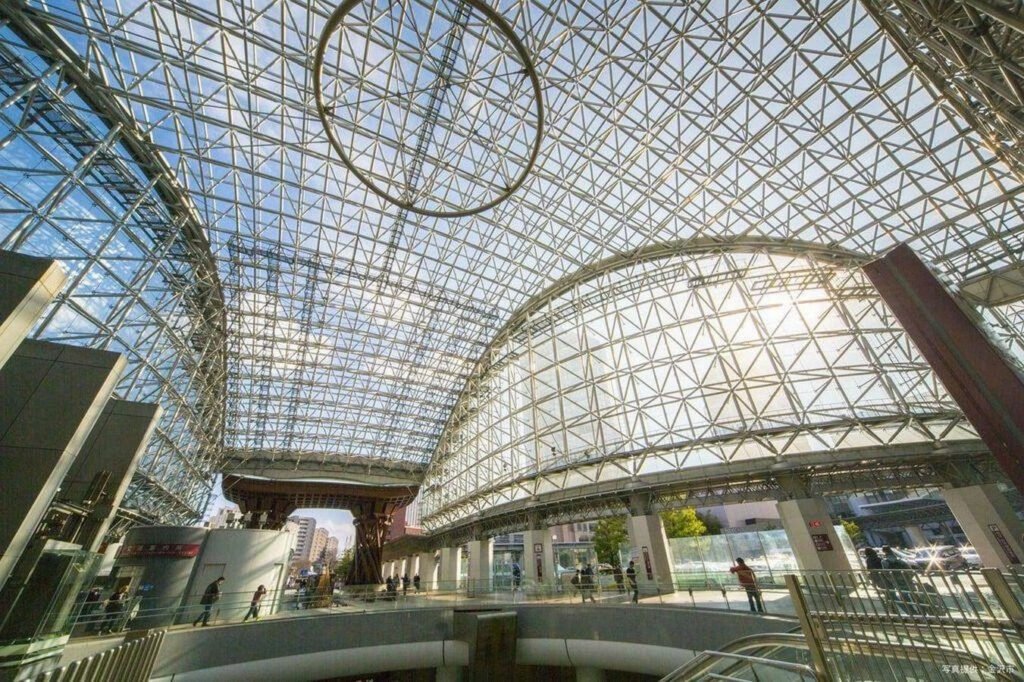
The dome was designed around the idea of hospitality, symbolically offering visitors an umbrella in a region famous for frequent rain and snow.
It is a clever combination of Kanazawa’s traditional identity and modern architecture.
🌙 Don’t Miss Tsuzumi-mon at Night
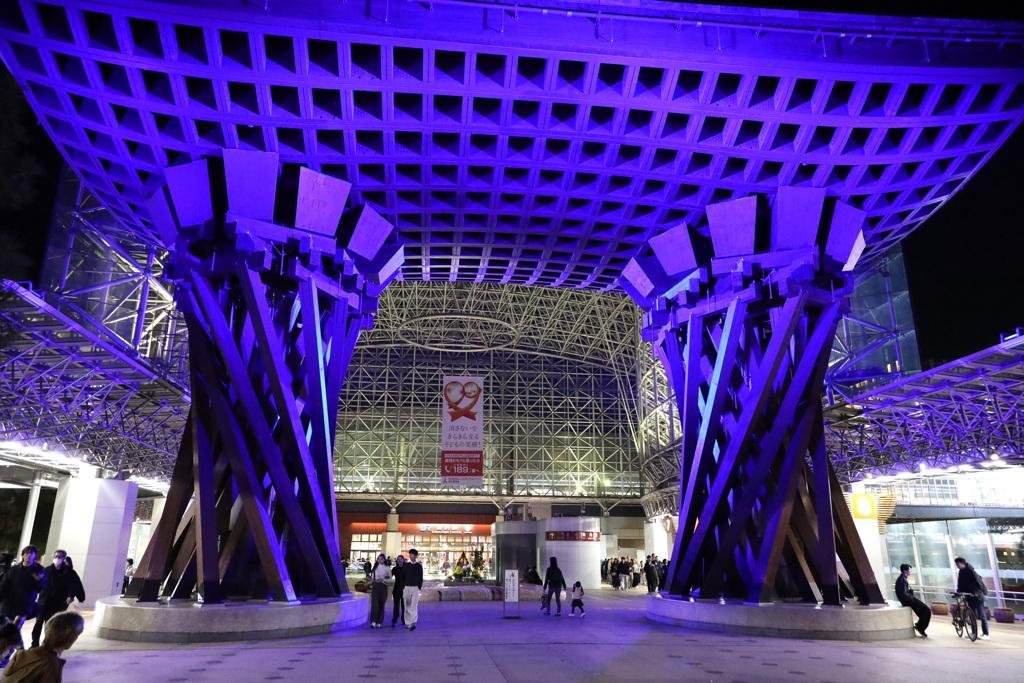
If your schedule allows, return after sunset.
The gate is illuminated from sunset until midnight, and the official tourism guide currently lists brief hourly displays inspired by Kanazawa’s traditional five Kaga colors. Lighting arrangements can change for events, so treat the exact display as a bonus rather than something to build an entire itinerary around.
It also gives us one of the strongest night photographs for this guide.
🗺️ Suggested Day 2 Route
A convenient second-day itinerary could look like:
Omicho Market → Nagamachi Samurai District → 21st Century Museum → Kanazawa Station
Start with seafood at Omicho Market, spend the late morning wandering through the samurai district, switch completely into modern Japan at the contemporary art museum, and finish beneath the illuminated Tsuzumi-mon Gate.
For travelers with limited time, Omicho and Nagamachi are especially easy to combine; Kanazawa’s official tourism site even features them together as a roughly three-hour half-day route.
🏨 8. Where to Stay in Kanazawa
Kanazawa is compact enough that you do not need to stay directly beside every attraction. However, choosing the right neighborhood can make your trip much easier.
For first-time visitors, Kanazawa Station is particularly convenient for transportation and day trips, while the central areas around Korinbo, Omicho Market and Kanazawa Castle put you closer to many of the city’s historic attractions.
Below are several accommodation options for different travel budgets.
💎 Luxury Hotels & Resorts
Hyatt Centric Kanazawa
Location: Kanazawa Station Area
Why We Recommend It: Modern rooms, excellent transportation access and a convenient location almost immediately outside Kanazawa Station.
Best For: Couples, first-time visitors and travelers who value convenience.
Hyatt Centric Kanazawa opened in 2020 and sits about a two-minute walk from Kanazawa Station’s west exit. It has 253 rooms, an all-day restaurant, rooftop bar and fitness center.
Hotel Nikko Kanazawa
Location: Kanazawa Station Area
Why We Recommend It: High-floor rooms with impressive city views and multiple dining options.
Best For: Couples, special occasions and travelers looking for a more traditional upscale hotel experience.
Hotel Nikko Kanazawa rises 30 floors and approximately 130 meters near Kanazawa Station. Its 249 guestrooms are located from the 17th floor upward, giving many rooms elevated views over the city.
THE HOTEL SANRAKU KANAZAWA
Location: Central Kanazawa / near Omicho Market
Why We Recommend It: A luxurious alternative for travelers who want to stay closer to Kanazawa’s historic center rather than directly beside the station.
Best For: Culture-focused travelers and couples.
The property is included among the city’s officially listed accommodation options and emphasizes a design combining Kanazawa tradition with contemporary elements.
⭐ Mid-Range Hotels
Hotel Resol Trinity Kanazawa
Location: Near Omicho Market
Why We Recommend It: Convenient for combining sightseeing with morning visits to Omicho Market.
Best For: Couples and independent travelers.
Its central location makes it a practical base if food and historic sightseeing are priorities.
Hyatt House Kanazawa
Location: Kanazawa Station Area
Why We Recommend It: Residential-style accommodation with excellent station access.
Best For: Longer stays, couples and travelers carrying more luggage.
The official Kanazawa accommodation directory describes Hyatt House as a residential-style hotel directly in front of Kanazawa Station.
OMO5 Kanazawa Katamachi by Hoshino Resorts
Location: Katamachi
Why We Recommend It: Great access to dining and nightlife in one of central Kanazawa’s livelier neighborhoods.
Best For: Travelers who want restaurants and evening entertainment nearby.
The city’s official accommodation guide specifically highlights the property for its connection to local food and nightlife.
💰 Budget-Friendly Hotels
Hotel Mystays Kanazawa Castle
Location: Kanazawa Station Area
Why We Recommend It: A practical option close to the station without requiring a luxury-hotel budget.
Best For: Budget-conscious couples and short stays.
Kanazawa Central Hotel
Location: Near Kanazawa Station
Why We Recommend It: Straightforward accommodation with convenient transportation access.
Best For: Solo travelers and visitors prioritizing location over luxury.
The official tourism directory describes it as being immediately near the station, making it particularly useful for travelers arriving with luggage or leaving early the following morning.
The Square Hotel Kanazawa
Location: Central Kanazawa
Why We Recommend It: A good alternative for travelers who prefer staying closer to the sightseeing and market areas.
Best For: Couples, friends and value-focused travelers.
🍣 9. What to Eat in Kanazawa
Kanazawa deserves to be treated as a food destination, not simply a sightseeing city.
Its position beside the Sea of Japan provides access to excellent seafood, while the city’s long cultural history has created distinctive local dishes and sweets.
If you only have a few days, these are the flavors I would prioritize.
🐟 Kaisendon & Fresh Seafood
Start with seafood.
Omicho Market has been central to Kanazawa’s food culture for more than 300 years and contains over 170 businesses, with fresh Sea of Japan seafood playing a major role. Crab, yellowtail and shrimp are especially associated with the colder season.
Omicho Kaisendon-ya Hirai
📍 Omicho Market
This is an easy option for travelers specifically looking for a dramatic kaisendon seafood bowl. The restaurant specializes in bowls generously topped with fresh fish sourced through Omicho Market.
Try: Kaisendon / assorted fresh seafood bowl
Best For: Seafood lovers and first-time visitors
🍢 Kanazawa Oden
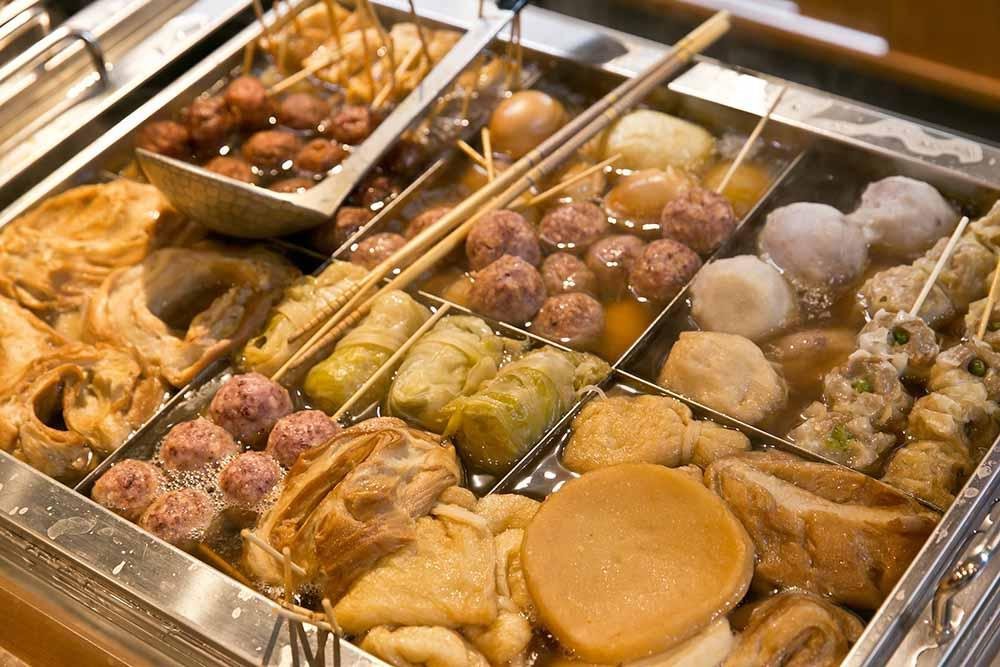
Oden appears throughout Japan, but Kanazawa has developed a particularly strong local oden culture.
The city’s tourism authority maintains an entire guide to restaurants serving Kanazawa Oden, including options around Omicho Market, Higashi Chaya and Kanazawa Station.
Expect ingredients simmered slowly in flavorful broth, making this especially satisfying during Kanazawa’s colder months.
Try: Kanazawa Oden
Best Time: Autumn and winter — although you can find it year-round.
🍛 Kanazawa Curry
If you want something heavier after a long sightseeing day, try Kanazawa curry.
The local style is typically known for a thick, rich curry sauce and hearty presentation, often paired with shredded cabbage and a cutlet.
It is completely different from the delicate seafood meals Kanazawa is famous for, which makes it a good change of pace during a multi-day stay.
Try: Katsu curry
Best For: Casual lunch or inexpensive dinner
🍵 10. Cafés & Traditional Sweets
Kanazawa’s café experience becomes especially interesting around its preserved historic districts.
Rather than only looking for modern coffee shops, make time for at least one traditional tea-and-sweets experience.
🍵 Kaikaro Teahouse
📍 Higashi Chaya District
Kaikaro is a historic chaya where visitors can experience traditional surroundings while enjoying sweets and tea. Kanazawa’s official tourism guide specifically lists it as a café where visitors can enjoy fine sweets in a historic space.
Try: Japanese sweets with tea
Best For: Traditional Kanazawa atmosphere
This is exactly the kind of stop that fits naturally between walking around Higashi Chaya’s wooden streets and browsing its craft shops.
🍡 Kintsuba Nakataya
Another option around Higashi Chaya is Kintsuba Nakataya, known for traditional Japanese sweets highlighting the flavor of red beans.
Pairing traditional wagashi with tea gives you a completely different side of Kanazawa’s food culture from Omicho’s seafood-heavy experience.
✨ Don’t Leave Without Trying Kanazawa Gold Leaf
PHOTO 24 — Gold-leaf soft serve or traditional Kanazawa sweets
Gold leaf has become one of Kanazawa’s most recognizable cultural symbols, and visitors will encounter it everywhere from crafts to desserts.
The famous gold-leaf soft-serve ice cream around Higashi Chaya is undeniably touristy — but it is also one of those uniquely Kanazawa experiences that is fun to try once.
And yes, it makes a ridiculously good travel photo. 😄
💡 TravelNest365 Food Tip
Don’t try to squeeze all of Kanazawa’s food into Omicho Market.
A better approach is:
Morning / Lunch → Omicho Market seafood
Afternoon → Higashi Chaya tea & sweets
Dinner → Kanazawa Oden or local Japanese cuisine
That way, food becomes part of the sightseeing route instead of requiring separate trips across the city.
🗺️ Where Should You Stay?
For most first-time visitors:
🚄 Convenience: Kanazawa Station
🍣 Food: Omicho Market area
🏯 Sightseeing: Central Kanazawa / Castle area
🌙 Restaurants & nightlife: Katamachi
If you’re arriving from Kyoto or Osaka, staying around Kanazawa Station is particularly convenient because you can leave your luggage quickly and start exploring without wasting much time.
🌸 11. Best Time to Visit Kanazawa
Kanazawa is a true four-season destination, and the best time to visit depends on the experience you want.
🌸 Spring — March to May
Spring is one of the most beautiful times to explore Kanazawa. Cherry blossoms usually transform areas around Kenrokuen Garden and Kanazawa Castle into some of the city’s most photogenic landscapes.
Temperatures are also comfortable for walking between attractions, making spring an excellent choice for first-time visitors.
☀️ Summer — June to August
Summer brings lush greenery to Kenrokuen and longer daylight hours for sightseeing.
However, expect warmer temperatures, humidity and periods of rain. Lightweight clothing and a compact umbrella are useful additions to your day bag.
🍁 Autumn — October to November
Autumn may be the best overall season for travelers who love photography.
Kenrokuen and other gardens around Kanazawa turn shades of red, orange and gold, while the cooler temperatures make walking around the historic districts particularly enjoyable.
❄️ Winter — December to February
Winter offers a completely different Kanazawa experience.
Snow can transform Kenrokuen, Kanazawa Castle and the historic neighborhoods, while the famous yukitsuri ropes protecting garden trees create one of the city’s signature seasonal scenes.
Winter is also an excellent season for seafood, particularly regional crab and yellowtail. (visitkanazawa.jp)
⭐ TravelNest365 Pick
For a first visit, I would choose:
Late March–April for spring scenery
or
Late October–November for autumn colors.
But if snowy traditional Japan is what you want to photograph, winter may actually be the most memorable season.
🗓️ 12. How Many Days Do You Need in Kanazawa?
For most travelers, 2–3 days is ideal.
One day is technically possible, but you would spend much of the trip moving quickly between attractions rather than experiencing the city.
With two full days, you can comfortably cover most of the major highlights.
With three days, you can slow down, spend more time exploring the historic neighborhoods and add a nearby day trip.
🧳 13. Suggested Kanazawa Itinerary
DAY 1 — Classic Kanazawa
Morning
Kenrokuen Garden
↓
Kanazawa Castle Park
↓
Gyokusen-inmaru Garden
Lunch
Head toward Omicho Market for fresh seafood or kaisendon.
Afternoon
Higashi Chaya District
↓
Traditional tea & sweets
↓
Gold-leaf shops
Evening
Explore central Kanazawa and enjoy a local dinner.
DAY 2 — Samurai, Food & Modern Kanazawa
Morning
Omicho Market
↓
Nagamachi Samurai District
↓
Nomura Samurai Residence
Afternoon
21st Century Museum of Contemporary Art
↓
Korinbo / Katamachi
Evening
Kanazawa Station
↓
Tsuzumi-mon illumination
Finish with Kanazawa Oden or Kanazawa curry for dinner.
DAY 3 — Optional Day Trip
If you have a third day, consider using Kanazawa as a base for exploring more of the Hokuriku region.
One of the most popular options is Shirakawa-go, famous for its traditional steep-roofed gassho-style farmhouses and UNESCO World Heritage status.
Another possibility is Kaga Onsen, where travelers can experience hot-spring towns south of Kanazawa.
For travelers who prefer staying inside the city, use Day 3 to explore Kanazawa more slowly, visit additional museums, shop for traditional crafts or revisit your favorite historic district.
🚄 14. How to Get to Kanazawa
From Tokyo
The Hokuriku Shinkansen provides direct rail service between Tokyo and Kanazawa.
The fastest services take approximately 2 hours and 30 minutes, making Kanazawa surprisingly accessible from the capital. (visitkanazawa.jp)
From Kyoto
Since the Hokuriku Shinkansen extension to Tsuruga opened, travelers from Kyoto generally take the Limited Express Thunderbird to Tsuruga, then transfer to the Hokuriku Shinkansen for Kanazawa.
The journey is roughly two hours, depending on connections. (visitkanazawa.jp)
From Osaka
The route from Osaka works similarly:
Osaka → Tsuruga by Thunderbird → Kanazawa by Hokuriku Shinkansen
Allow roughly 2–2½ hours, depending on the service and transfer. (visitkanazawa.jp)
💡 Important for Returning Japan Travelers
Older travel guides may still describe the Thunderbird as running directly to Kanazawa.
That information is outdated.
Following the opening of the Hokuriku Shinkansen extension in March 2024, Thunderbird services terminate at Tsuruga, where passengers transfer to the Shinkansen for Kanazawa. (westjr.co.jp)
🚌 15. Getting Around Kanazawa
You do not need a rental car to explore central Kanazawa.
Many major attractions are relatively close together, and walking is often the most enjoyable way to experience the historic neighborhoods.
For longer distances, the Kanazawa Loop Bus connects many of the major sightseeing areas.
The official tourism guide currently lists a One Day Pass for ¥800 for adults and ¥400 for children, covering designated buses within the central area and offering discounts at participating cultural facilities. (visitkanazawa.jp)
🚶 Walking Works Particularly Well For:
Kenrokuen ↔ Kanazawa Castle
Higashi Chaya ↔ Omicho Market
Nagamachi ↔ Korinbo
For a first visit, I would combine walking + public transportation rather than relying exclusively on either one.
💴 16. Kanazawa Travel Budget
Kanazawa can work for several different travel styles.
A budget traveler can rely on business hotels, markets and casual restaurants, while luxury travelers will find upscale hotels, fine dining and premium cultural experiences.
A reasonable daily budget excluding accommodation might look roughly like:
| Travel Style | Estimated Daily Budget |
|---|---|
| 💰 Budget | ¥5,000–¥8,000 |
| ⭐ Comfortable | ¥8,000–¥15,000 |
| 💎 Higher-End | ¥15,000+ |
These are planning estimates rather than fixed prices. Seafood meals, museum admissions, shopping and seasonal prices can change the total considerably.
💡 17. Practical Travel Tips for Kanazawa
Start early at Kenrokuen. It gives you a quieter experience and better opportunities for photography.
Bring comfortable shoes. Kanazawa is compact, but you may walk much farther than expected when combining its historic districts.
Carry an umbrella. Kanazawa receives substantial precipitation throughout the year, including rain and winter snow.
Visit Omicho before late afternoon. Many market businesses operate primarily during daytime hours.
Respect residential areas. Nagamachi and the chaya districts are not simply theme-park attractions; people live and work around these historic neighborhoods.
Check museum schedules before visiting. Temporary exhibitions and individual artwork availability can change.
Don’t rush Higashi Chaya. Part of its appeal comes from wandering slowly, stopping for tea and exploring small traditional shops.
🎁 18. What to Buy in Kanazawa
Kanazawa is one of Japan’s great traditional craft cities, making it an excellent place to shop for souvenirs that feel genuinely connected to the destination.
Look for:
✨ Gold-leaf products
🍵 Traditional Japanese sweets
🎨 Kutani porcelain
🪵 Local lacquerware
👘 Traditional craft products
Kanazawa’s traditional crafts were supported by centuries of Maeda-domain culture, and gold leaf remains particularly closely associated with the city. (japan.travel)
Instead of buying everything around Kanazawa Station at the end of the trip, browse the smaller craft shops around the historic districts first.
❤️ Final Thoughts — Is Kanazawa Worth Visiting?
Absolutely.
Kanazawa offers many of the experiences travelers associate with traditional Japan — beautiful gardens, samurai history, geisha districts, wooden architecture, tea culture and traditional crafts — while maintaining a noticeably different atmosphere from Kyoto.
Add excellent Sea of Japan seafood, impressive contemporary art and easy transportation, and the city becomes much more than a quick stop between larger destinations.
For first-time visitors to Japan, Tokyo, Kyoto and Osaka will understandably remain priorities.
But once you are ready to explore beyond Japan’s most famous route, Kanazawa deserves to be near the top of the list.
Spend two or three days here.
Walk through Kenrokuen early in the morning.
Eat fresh seafood at Omicho Market.
Explore the old samurai streets.
Slow down with tea in Higashi Chaya.
Then finish your trip beneath the illuminated Tsuzumi-mon Gate.
Kanazawa may not be the loudest destination in Japan — and that is exactly why it can become one of the most memorable.
🔗 For More Japan Travel Guides
⦿ Osaka Travel Guide 2026 – Best Things to Do, Food & Travel Tips
⦿ Kyoto Travel Guide 2026 – Temples, Food, Hotels & Travel Tips
🌐 Useful External Links
⦿ Visit Kanazawa – Official Travel Guide — Official tourism information for attractions, transportation, food, accommodation, and seasonal travel in Kanazawa.
⦿ Kenrokuen Garden – Official Visitor Information — Check current opening hours, admission fees, seasonal information, and visitor guidance for Kenrokuen Garden.
⦿ 21st Century Museum of Contemporary Art, Kanazawa – Official Website — Current exhibitions, opening hours, admission information, and museum updates.
⦿ JR West – Official Travel Information — Official train schedules, route information, tickets, and rail passes for travel between Osaka, Kyoto, Tsuruga, and Kanazawa.